Guide profiles
Specify profile shape, dimensions and position across the belt. Include the guide groove dimensions and note any reverse bends.
Fabrication
Request guides, cleats, sidewalls, perforations or a specific splice. We review the belt construction, operating conditions and installation access before confirming a configuration.
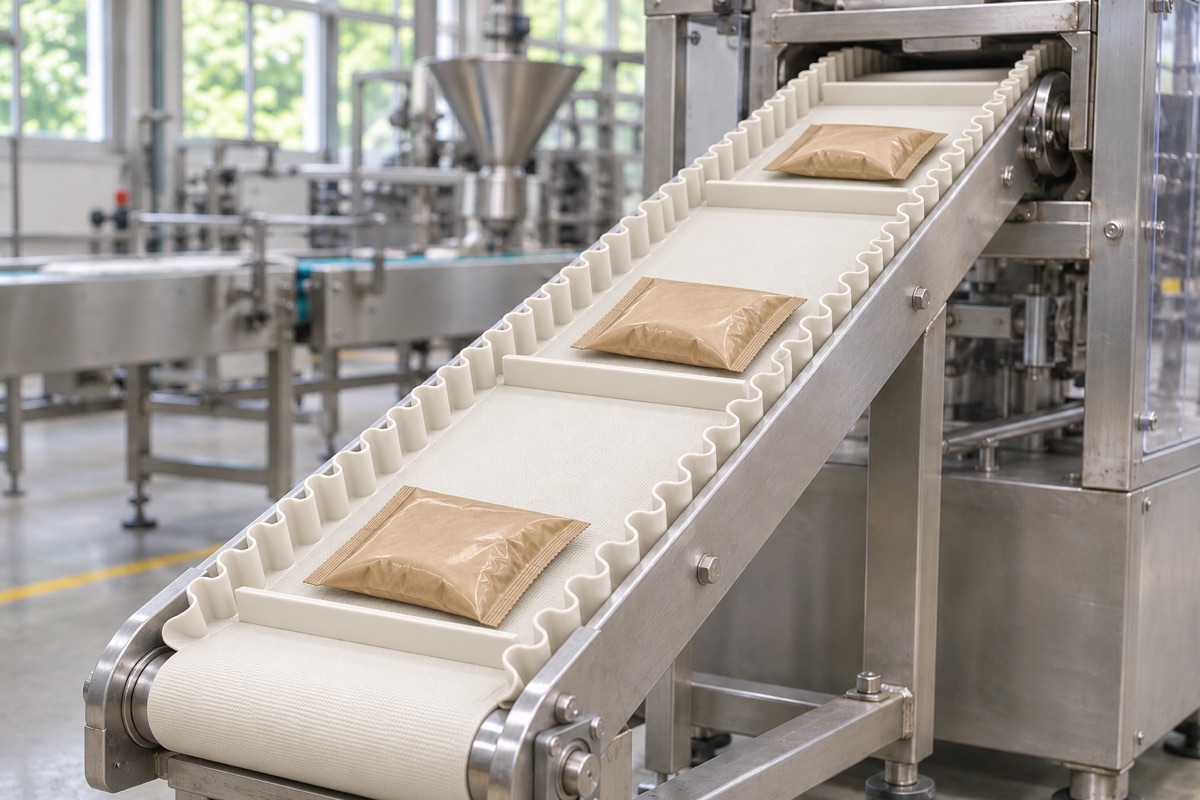
Confirm which options are available for the proposed belt and conveyor geometry.
Specify profile shape, dimensions and position across the belt. Include the guide groove dimensions and note any reverse bends.
Specify cleat shape, height, pitch, direction of travel and distance from each belt edge. Include the angle of incline and what the belt carries.
Specify wall height, edge offset and the clear width between walls. Show how the sidewalls meet the cleats, if both are required.
Show hole size, pitch, pattern and edge margins on a drawing. Identify the direction of travel, the splice position and any areas that must remain unperforated.
Share your preferred splice, smallest pulley diameter and installation access. Review suitable splice or mechanical fastener options for the specific belt.
Request a closed-loop belt or an open length. For an open belt, specify whether the ends need preparation for joining on site.
A marked-up sketch is a starting point. Confirm final dimensions and tolerances on the drawing used for the order.
Describe your belt